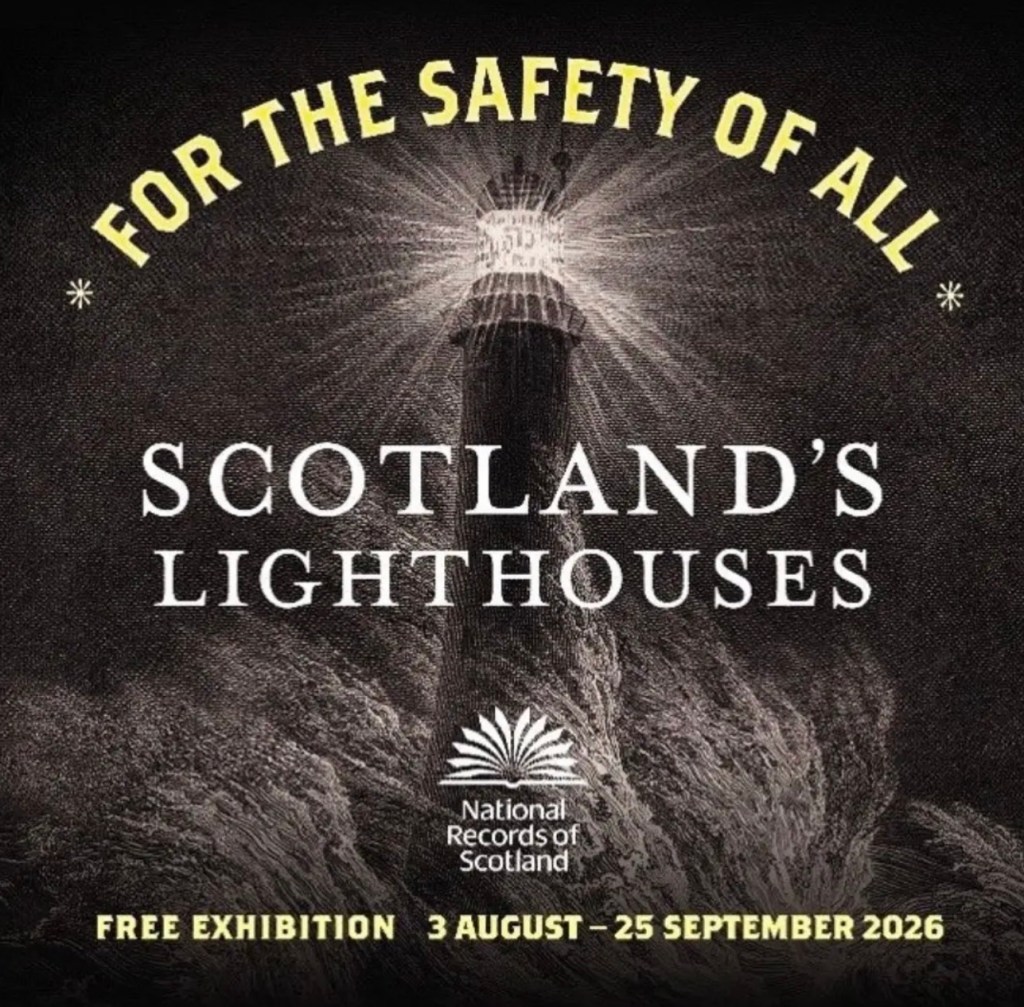
Last week I visited an exhibition in Edinburgh about Scotland’s lighthouses. A few days later, while telling a friend about it, I mentioned the Flannan Isles and the mysterious disappearance of three lighthouse keepers in December 1900. I was amazed to discover that she had never heard the story.
With my interest in lighthouses however I probably shouldn’t have been surprised. The Flannans have always felt familiar to me although I find it hard to pinpoint why. I do remember that when we studied Wilfrid Wilson Gibson’s poem Flannan Isle at primary school I was already very aware of the mysterious story associated with the islands.
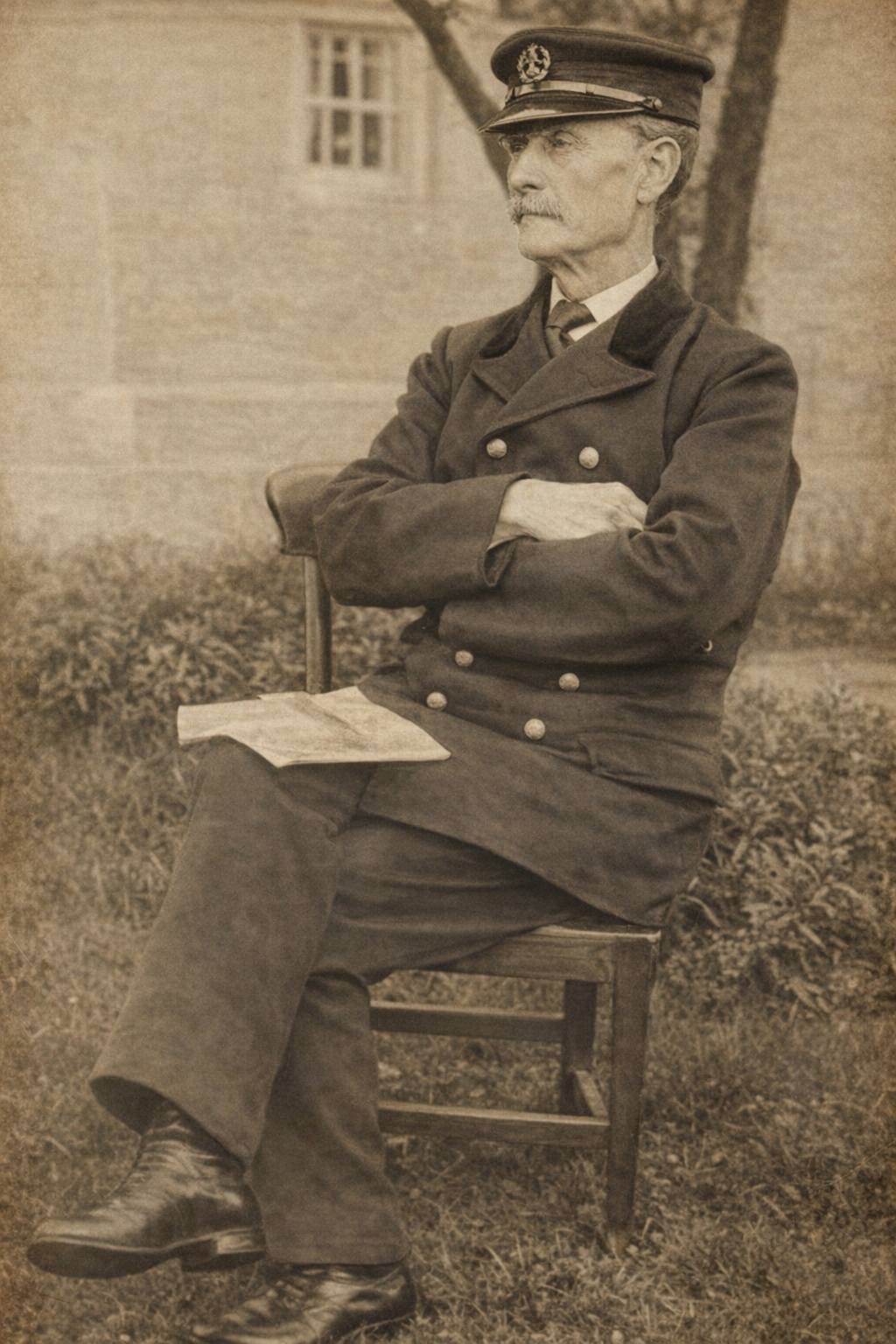
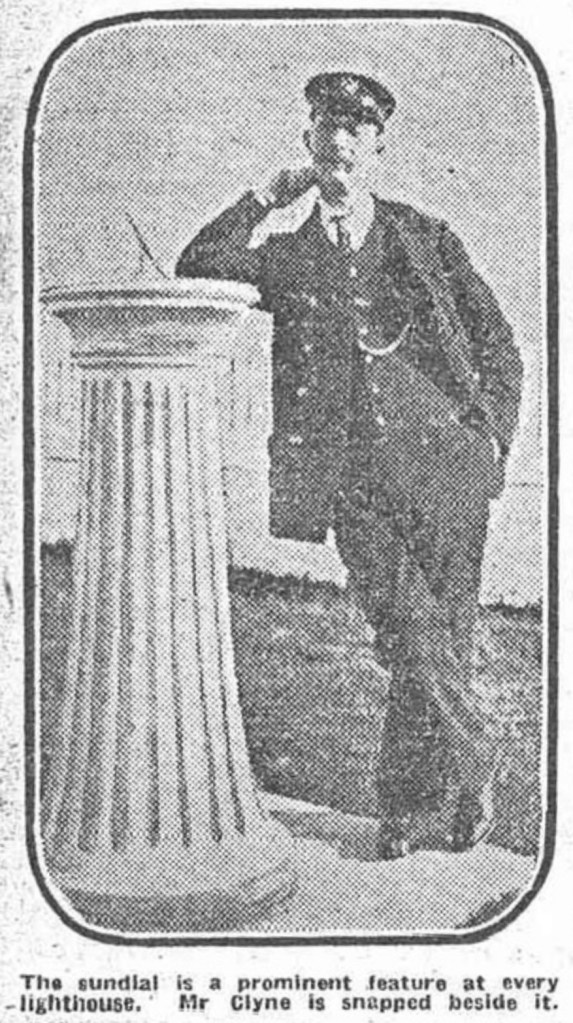
My great-grandfather, Robert Simpson Clyne, spent more than forty years in the Scottish lighthouse service. In December 1922, shortly after his retirement, he began a series for The People’s Journal entitled My Forty Years as a Lighthouse-Keeper. He chose to begin the whole series with the Flannan tragedy.
That alone tells me how strongly the story had remained with him, and probably why it was passed down through the family and connected me to it.
The Tragedy of the Flannans.
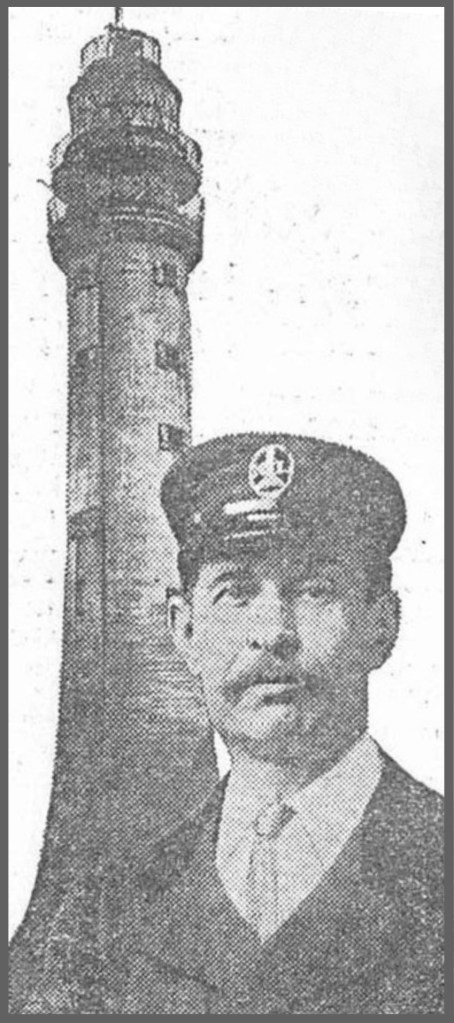
At the time of the Flannan Island tragedy in December 1900, Robert Clyne was in the middle of an eight year stint on the Bell Rock off the coast of Arbroath. The Bell Rock is one of Scotland’s most famous lighthouses and was known for its remote location in the North Sea.
There were three keepers on the Bell as were on the Flannans. So, although their working arrangements were not identical, perhaps that was another reason the Flannan tragedy felt particularly close to home for Grandfather Clyne.
In his People’s Journal articles he describes the Flannans as one of the most remarkable occurrences ever chronicled around the Scottish coast and says that it demonstrated both the dangers of lighthouse life and the atmosphere of mystery surrounding some of those lonely watches.
December 1900 was a particularly wet and stormy month, with some newspaper reports describing the weather as the worst experienced since the year of the Tay Bridge disaster in 1879.
Robert wrote
“I refer to the tragedy of the Flannans, those lonely, surf beaten islets that lie off the outer shores of the Hebrides, Towards the lighthouse that keeps sentinel there the service steamer Pole Star was making her way one misty morning, the skipper on the bridge with his gaze fixed on the rapidly nearing tower and the cluster of white buildings at its foot.
“Strange!” he muttered to himself. “No signal yet! I wonder where Duguid and his boys are this morning?”
The moments passed, and the eyes on the bridge continue to peer intently at the lighthouse, which every engine throb was bringing closer, until now the details were coming into view with the creeping certainty of a photograph print in a developing solution. First, the grey blurr of the station dissolved into the neat lines of buildings, familiar things became recognisable in the courtyard, and ultimately the lines of the stones in the round tower started out of the blank whiteness of the tapering wall.
The eyes of the man on the bridge swept from the empty balcony of the tower to the sea level of the rocky landing and back again. “Hanged if I can see a soul” he mused in a puzzled way. “Suppose I had better give them a blast of the siren in case they haven’t seen me come up. But it’s deuced queer.”
An oil-skinned arm stretched towards the whistle string, and the scream of escaping steam sent a piercing note over the black water to the little skerries the straggling firths took it up with a chatter, and the gulls rose in piping alarm as it reached the cliffs. It came back like a mocking laugh to the figures on the deck of the Pole Star. Again and again it went forth and as many times it came eerily back.
“Something serious has happened to Ducat surely” shouted the skipper to the uneasy group of men beside the hatches of the Pole Star. “It’s about time this was being inquired into.”
The crew began hurriedly to make the preparations which were ordained to lead them into one of the most uncanny experiences that ever befel the sailor who earns his bread round the islands of the Scottish West Coast.
The Pole Star was a tender in the Scottish Lighthouse Service. Her mission was to make periodic visits to the several lighthouses that keep vigil in the labyrinthine channels of the west.
There were gas tanks for supplying the beacons on her decks, and in her roomy holds were the variegated stores that were required at the stations in her course. On this winter carrying, as was her custom, a relief man for one she had posted there six weeks before. It was December. The man to be relieved would have the joy of a Christmas and New Year at home, those on the rock, separated from the domestic circle, had the prospect of chill watches in a lantern tower. They were a philosophic crew, notwithstanding, and cheerful enough until the grim shadow of the Flannans descended upon them.
The boat was down and dancing on the swell ere the Pole Star’s reversed engines brought her to a standstill. Away they went to the landing and in a trice were clambering up the rocky path that led to the light tower, some hundreds of feet above. Onward they toiled to the summit, now with conviction growing at every step that there was something wrong at the cliff top that baffled the imagination. The station level reached, they paused a brief moment to glance around. The courtyard was deserted like the lower level landing stage. A door was open, and some implements were scattered about as if hurriedly laid down. The party moved forward.
The threshold was crossed. “Hullo, there!” someone shouted, using his hands as a funnel. The voice carried upward round the spiral stairway, echoing on every landing. But there was no answering call. The men looked at each other, one ran over to the living quarters, and made for the sleeping rooms. The bunks were tidy but empty. Puzzlement giving way to alarm the searcher turned to the table, and his eye took in at once the significance of the remains of breakfast, and the unwashed dishes that lay in an untidy heap. He looked more closely, and the fact came to him that the litter on the table was not the remnant of that day’s breakfast. It was the first sinister portent of the tragedy that the next discovery was to confirm.
To look into the sleeping quarters had only been the work of a minute, and the remainder of the party has just commenced to mount the spiral stairway when he joined them with the news of his find and his fears. Together they silently passed up the stairway to the lantern. Crossing to the burners, they looked at the lighting mechanism. It might have been used the night before and it mightn’t. They turned to the log. The morning entry had been made. One of the pale group glanced at the date. “Not this morning’s entry” he simply said. Later, they learned that the Flannan light had not flashed it’s friendly signal for some nights.
What had happened to the men? Where was the principal keeper Ducat, the Arbroathian, and his two assistants? A message was sent to the waiting Pole Star and a search were made in the vicinity, but the Flannan mystery was not to be solved in that simple way. The relief was posted in the haunted tower. The Pole Star sailed away. The riddle of the Flannans is still unsolved.”
Robert, of course, was not actually present, but it is easy to imagine the circumstances being passed between the lightkeepers over and over in disbelief and horror. His recollections show how the story was remembered within the lighthouse world more than twenty years later. Checking the official records of the time also highlights where Robert Clyne’s recollections differ from the events as they were recorded. For example, it was the lighthouse tender Hesperus, rather than the Pole Star, that landed on the islands. The official records also describe the kitchen as neat and orderly, rather than containing the remains of breakfast remembered by Grandfather Clyne.
Newspaper reports of the time also noted the mystery and reported that the men who disappeared were: James Ducat, Principal Lightkeeper, Thomas Marshall, Assistant Lightkeeper and Donald McArthur, Occasional Keeper. The official records indicate that they disappeared during the afternoon of 15 December 1900. The official investigation concluded that the men had probably gone towards one of the landings and had been overwhelmed by an unexpected large wave. Their bodies were never found.
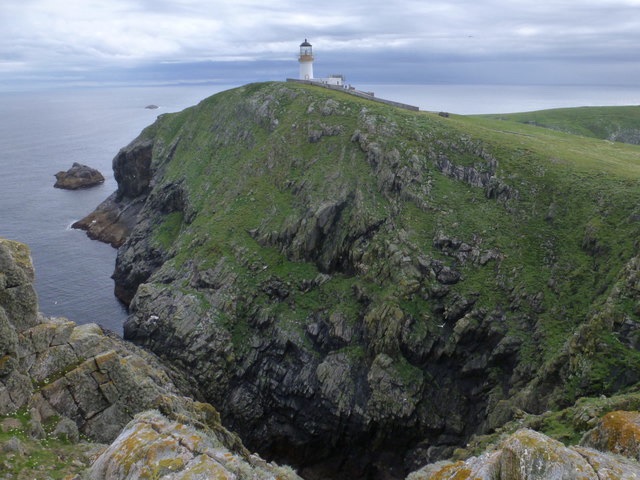
Flannan Isles: lighthouse and northern cliffs by Chris Downer
Jocelyn Grant, an archivist at the National Records of Scotland, has researched the lighthouse records and written about the disappearance here – it’s well worth a read. The Northern Lighthouse Board also has the records submitted following the disaster.
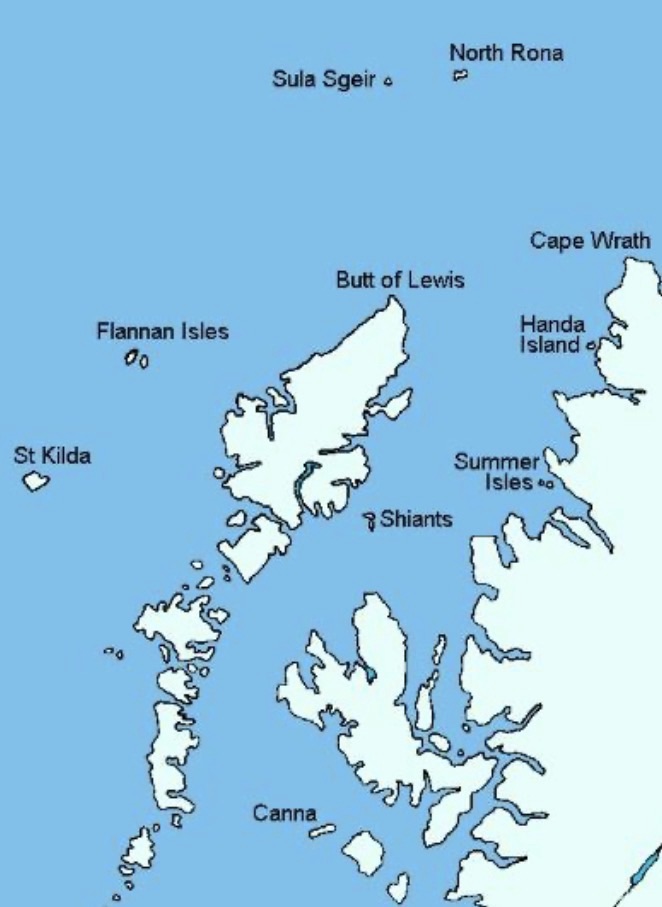
In a later Journal article, Robert noted the lack of communication between remote lighthouse stations and the outside world. In 1900, the keepers on the Flannans could simply disappear and no-one on shore would know immediately. Robert explains that wireless was later installed both on the Flannan Isles and at the Butt of Lewis. The two stations communicated daily at fixed times, and urgent requirements could be passed on through the Lewis telegraph system.
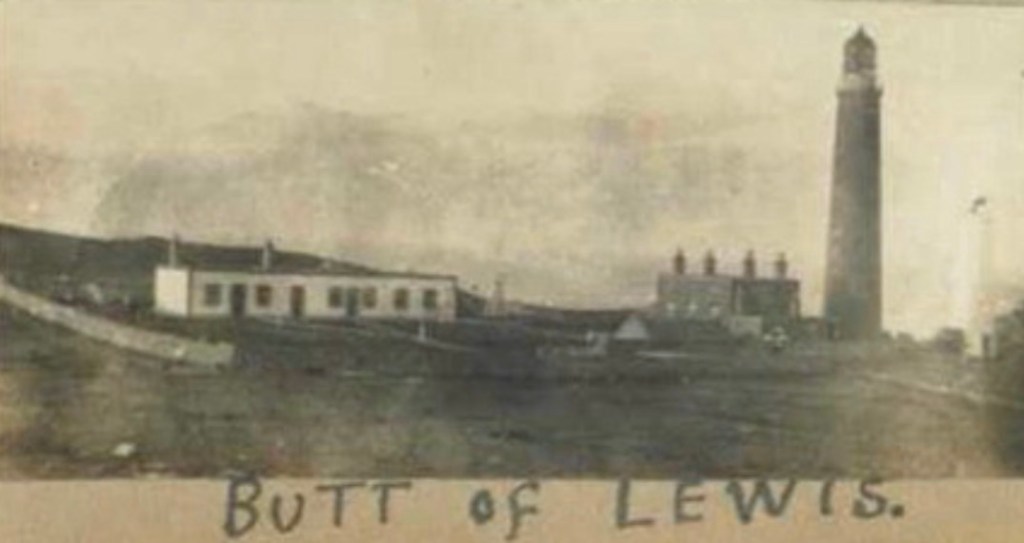
Four years later, Robert Clyne left the Bell Rock for the Butt of Lewis. He wrote “My association with the Flannans and its mystery was that I was appointed to the charge of the Lewis station on account of my knowledge of signalling.”
He describes how letters and postcards sent from the families at Breasclete would reach the Butt of Lewis, where the news could then be transmitted wirelessly to the men on the Flannans. The technology was primitive by modern standards, but for those families it meant that men living fifteen miles offshore were no longer quite so cut off from home.
The Flannan disappearance gradually became something more than a maritime accident as stories accumulated around it — an unfinished meal, an overturned chair, mysterious behaviour by the keepers and various supernatural explanations.
The mystery continues to cause fascination and speculation. I remember studying Wilfrid Wilson Gibson’s poem Flannan Isle at school. It creates a wonderfully eerie picture of the searchers entering the deserted lighthouse and finding “a door ajar, and an untouch’d meal” [Read Wilfrid Wilson Gibson’s Flannan Isle in full here]. Peter Maxwell Davies’s opera, The Lighthouse, also took the disappearance as its starting point.
The Doctor Who episode Horror of Fang Rock (1977) also echoes the Flannan story, and Tom Baker quotes Gibson at its end. In 2018, The Vanishing, starring Gerard Butler, offered another fictional interpretation of what might have happened to the missing lightkeepers.
I still can’t say when I first heard the story of the Flannans. It seems to have been part of the family background long before I knew that my great-grandfather had written about it, or that, only a few years after the tragedy, his own work would connect him so directly with those lonely islands.

