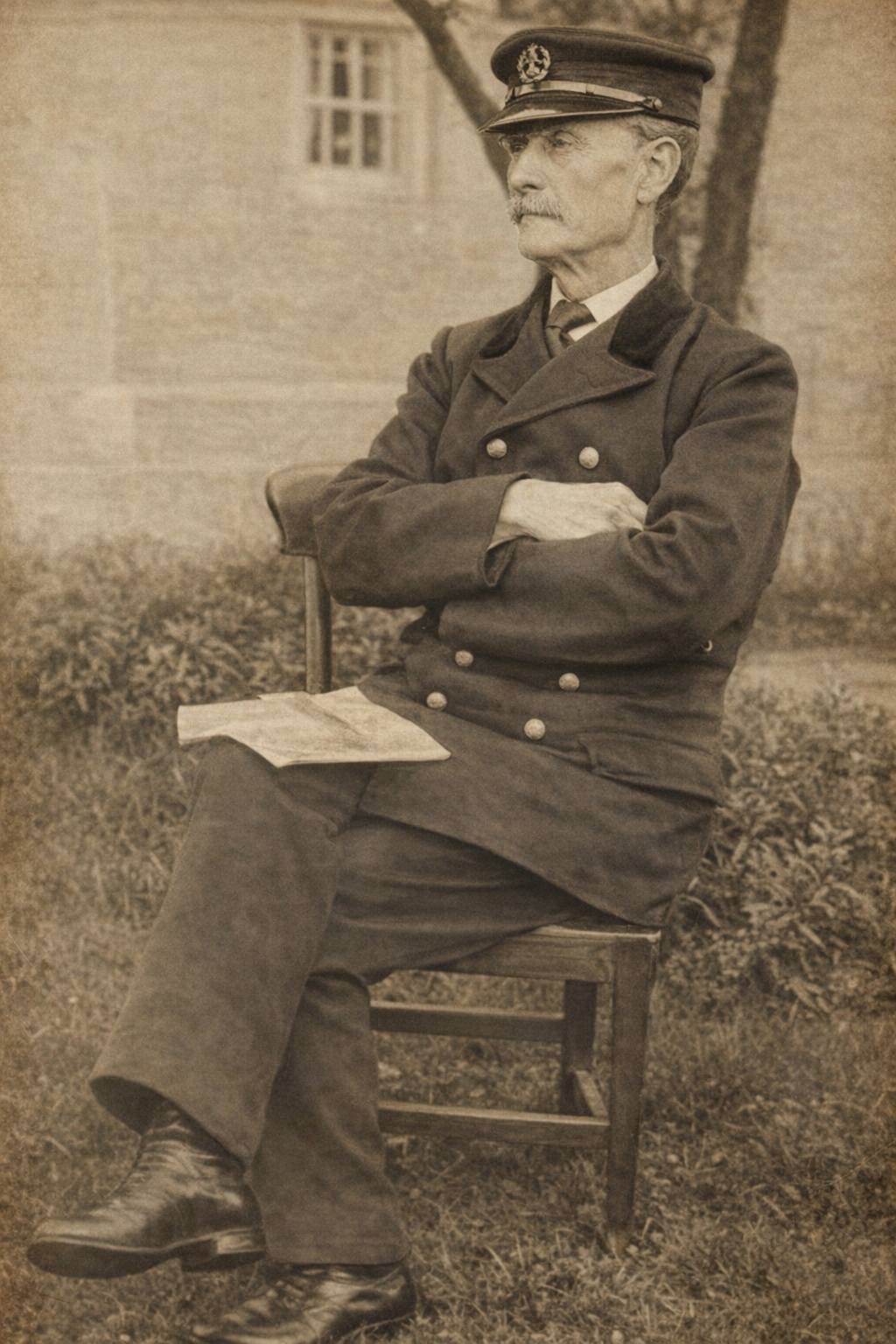
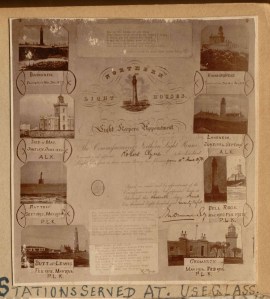
Robert Clyne was my great grandfather, my dad’s maternal grandfather. He spent almost forty years in the service of the Northern Lighthouse Board, working at some of Scotland’s most remote and famous lightstations, including the Isle of May, the Butt of Lewis, Bell Rock and Cromarty.
Robert was not only a lighthouse keeper, but a keen observer of the natural world, an early photographer, and a gifted storyteller.
Late in his career, he recorded his experiences in his own words, leaving behind a vivid account of lighthouse life as it was lived day by day.
Since, according to [People’s Journal, January 1923], “No better description of the life of a lighthouse-keeper could come from any pen than that of Mr Clyne, who depicts it with the graphic intimacy of one who has spent many long years in this circle of places as well as the duties of the lighthouse man.”, here are some of his words to tell of some of his life :
On Lighthouse Life
“Few lives are more deeply imbued with the spirit of adventure than those of the lighthousemen who keep their lonely watches on the sea-washed crags and reefs around our coast.”
On solitude and watching
“There is a strange companionship in the light itself, when all else is silence save for the wind and the sea.”
On the natural world
“The marine and bird life of a lighthouse is full of ever so much more interest and variety than the poor humans who dwell in the round tower with the winking eye.”
The Family Man
Robert Clyne’s working life is well documented, but contemporary notices place him just as firmly within his family and community. He was born into a household shaped by public service. His father, Alexander Clyne, served for many years as Inspector of Poor and parish clerk at Craig, remembered as a quiet and conscientious man who carried out his duties to the satisfaction of both council and parish. That tone of steadiness and responsibility runs clearly through Robert’s own life.
Although his career took him to some of Scotland’s most remote stations, Robert’s life was firmly rooted in family. He married Isabella Davidson in 1883, and the early years of their marriage were spent moving between lighthouse stations as their family grew.
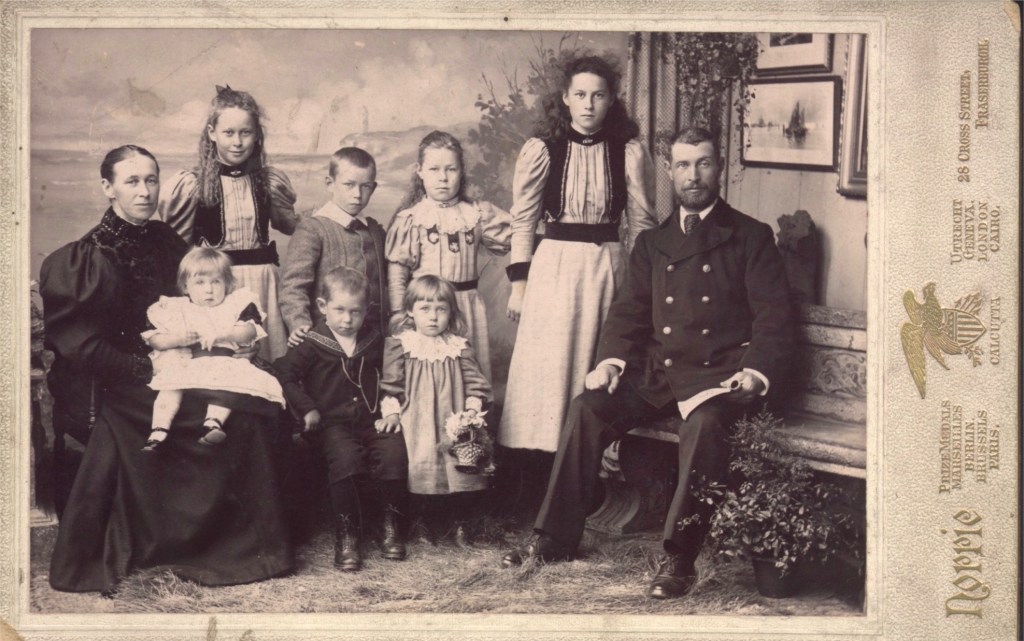
Six of their seven children (Lottie, Annie, Mary, Dave, Alec, Mona) were born during his years in service on the Isle of Man. Lizzie, the youngest, was born later after Robert was posted to Rattray Head in 1895.
As in many families, life brought both joy and times of hardship. I remember Auntie Lizzie recounting when scarlet fever hit the family during their time in Arbroath. At that time the family were living in the Signal Tower with Robert living off shore on the Bell Rock lighthouse. Fortunately the family did not succumb but she told me of how they all waved sheets from the Signal Tower windows to warn the menfolk not to make landing. Later on, tragedy befell when son, Dave, was killed in action in France in 1917. The family received a payment after his death and his sisters all had little cameos made to remember him.
In retirement, Robert continued to serve his community as curator of Montrose Museum, remembered as a gentle and generous presence — particularly with children — reflecting the same care and attentiveness that marked his life at home as well as in service.
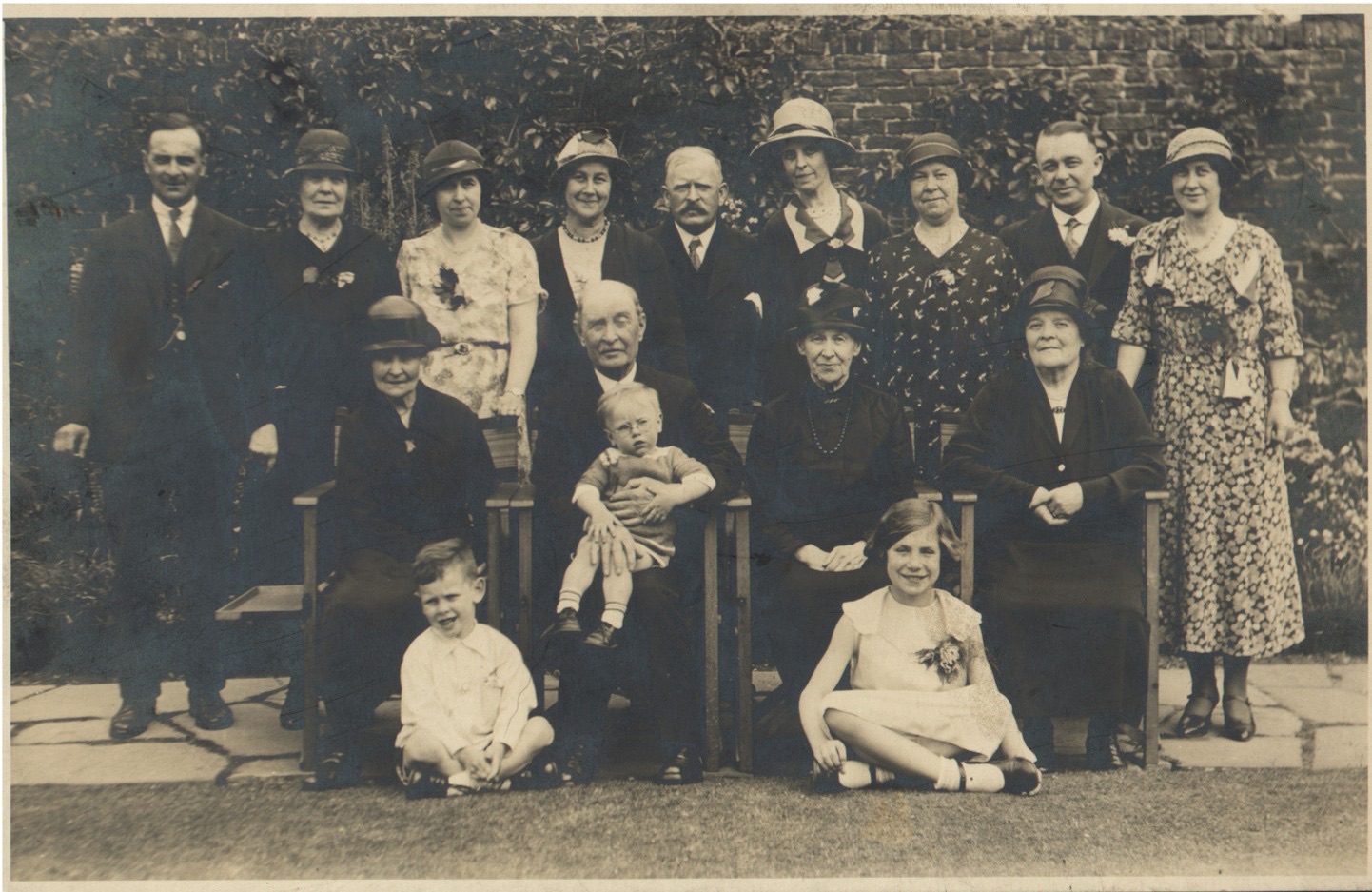
Robert and his wife Isabella celebrated their golden wedding anniversary in Montrose in 1933, surrounded by family. My Dad is the little boy cross legged at the font 💕
Robert penned many poems in his time – this is the one he added to the board above compiled around his retirement :
Forty years on duty bent
Upon these lighthouse towers I’ve spent.
Oft viewed the ruddy-rising sun,
Set glorious when the day was done;
Seen oft, in elemental strife,
A struggle dire ’twixt death and life;
The lights eclipsed that we may be
The safer from our enemy.
But now, when Peace in dawning nigh,
I’ll soon to Duty say Good-bye.

R. Clyne
 Craigachan