My Granny, Mona Duncan (nee Clyne) wrote this account of her journey to Lewis in 1908.

Now, in the first place I must tell you that my father was a Lighthouse Keeper & I was born on a lighthouse in the Isle of Man & am therefore what you would call a Manxman.
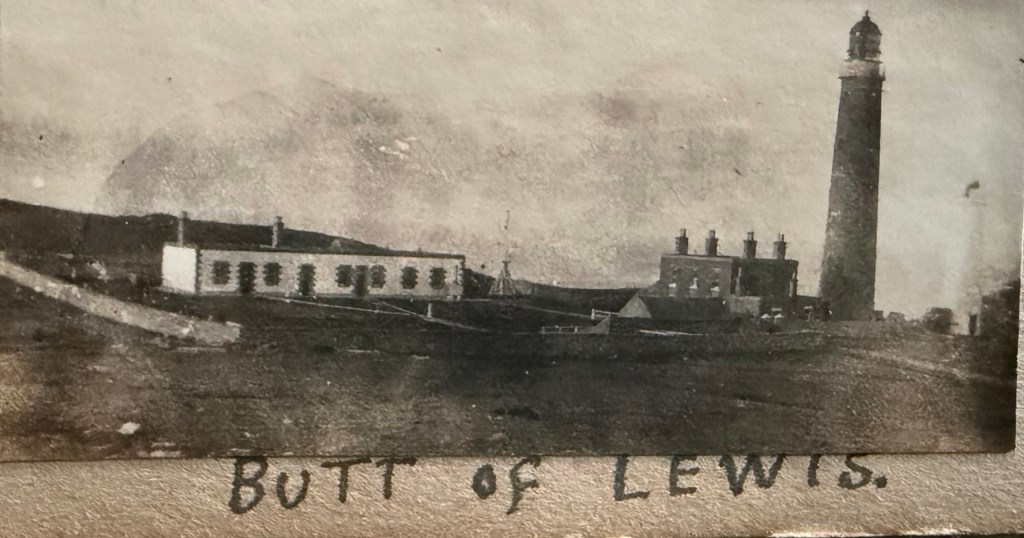
When my father got his shift to the Butt of Lewis he had had 8 years on the Bell Rock so he deserved a shore station. His orders were to proceed to Glasgow thence by boat to Stornoway but owing to illness in the family decided to go to Glasgow then by train to Mallaig, boat to Stornoway, as it took about half the time on the water.
This we did & arrived at Mallaig about 12 o’clock noon. The boat was at the pier & we embarked on what was to be my first thrilling adventure on the sea. I was 10 years old then. This was in the month of February & the weather was very bad then. Once the boat was out into the Minch it began to roll & toss & by early evening we were all pretty seedy. My mother was a very bad sailor & had to lie down, but I liked to stand on deck & watch the waves lashing over the bow of the boat.
Once I was nearly washed overboard—an extra big wave washed over the deck & had not one of the crew been near me I would have been into the sea. I was sent down below after that as it got very cold & was snowing hard. I would rather have been up on deck all the time.
Eventually we got into Stornoway at 12 o’clock & to see the crowds you would have thought it was 12 noon instead. Evidently it was the one bright spot of the day when the mail boat came in and all we could hear was people greeting one another in the Gaelic tongue.
We were strangers & had to find our way about by ourselves. However, we found the hotel all right & next day we thought we would continue our journey. Unfortunately we had arrived at the time of the Fast* & could not get a conveyance of any kind. During the time of the Fast no one works. After 5 days in Stornoway we managed to get a small horse drawn cab & set out on our last stage of the journey (30 miles). There were no motor cars in Lewis at that time. It was a cold bleak morning with heavy showers of hail and to make matters worse a pane of glass fell out of one of the windows. There was not much of interest on the road – the countryside is very flat and nothing but bogs & peat not even a tree to be seen.
We passed an occasional cart on the way in to Stornaway for supplies I may say these small carts were the only means of conveyance for bringing provisions or anything that was required. All our furniture came in these carts & we had to wait for days for some things – our piano lat our in the snow for a week as the cart had toppled over. the built up roads.
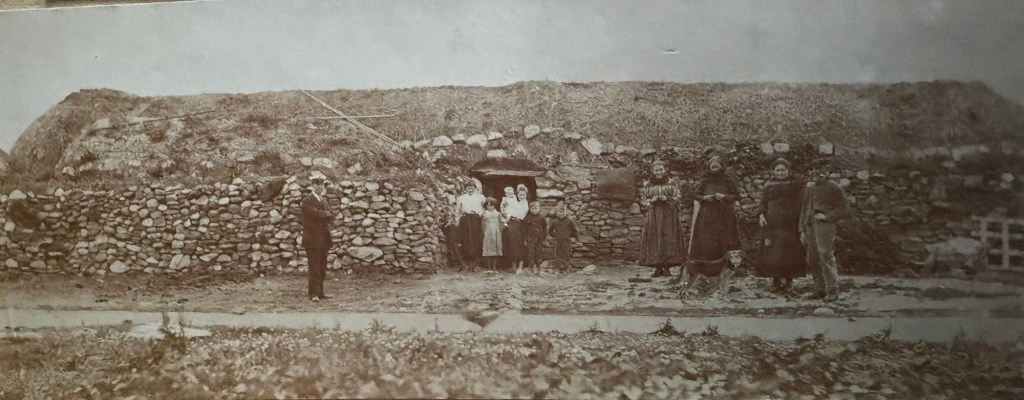
After 15 miles had gone we stopped at a place called Barvas where we had a meal & the horse changed. We proceeded on our way again and not gone far when we heard the barking of dogs but could see no houses. My father laughed at us & asked if we didnt see the smoke coming out of the tops of the houses but we said these were tattie pits not houses. However we discovered they were houses but the people all kept inside till we passed. (They are very shy with strangers & have to know you well before you get into their houses). The houses were all thatched with straw & the peat fire being in the middle of the floor the smoke came out all over the thatch.
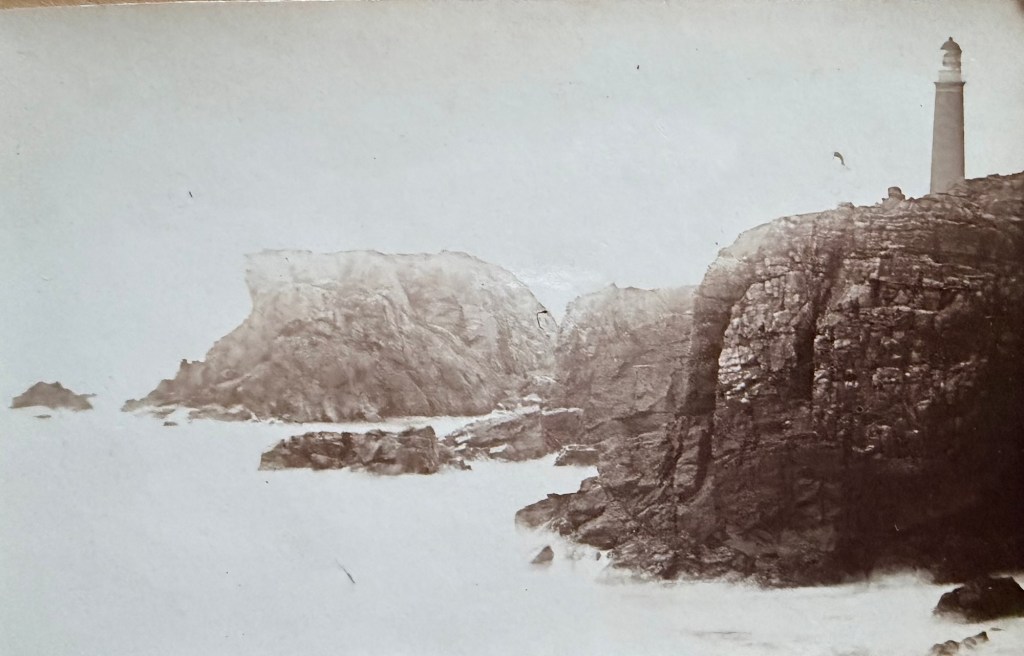
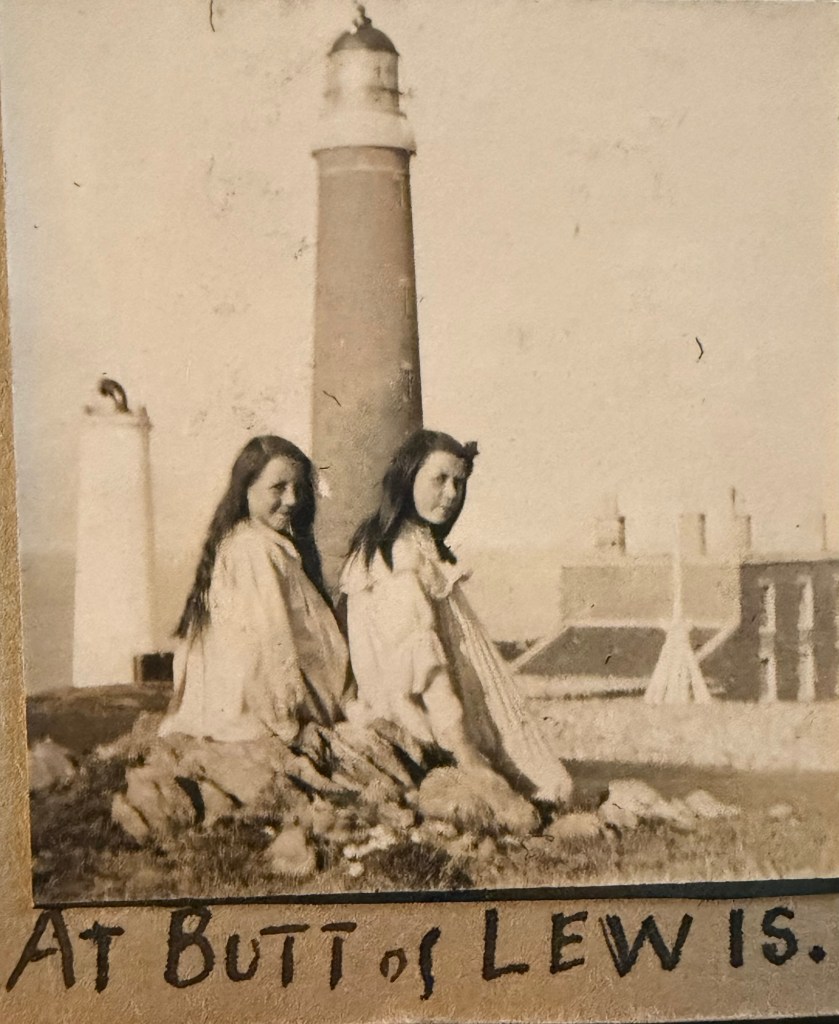
We passed numerous villages on the way & could see the Lighthouse in the distance standing white against the sea through we were still miles from it.
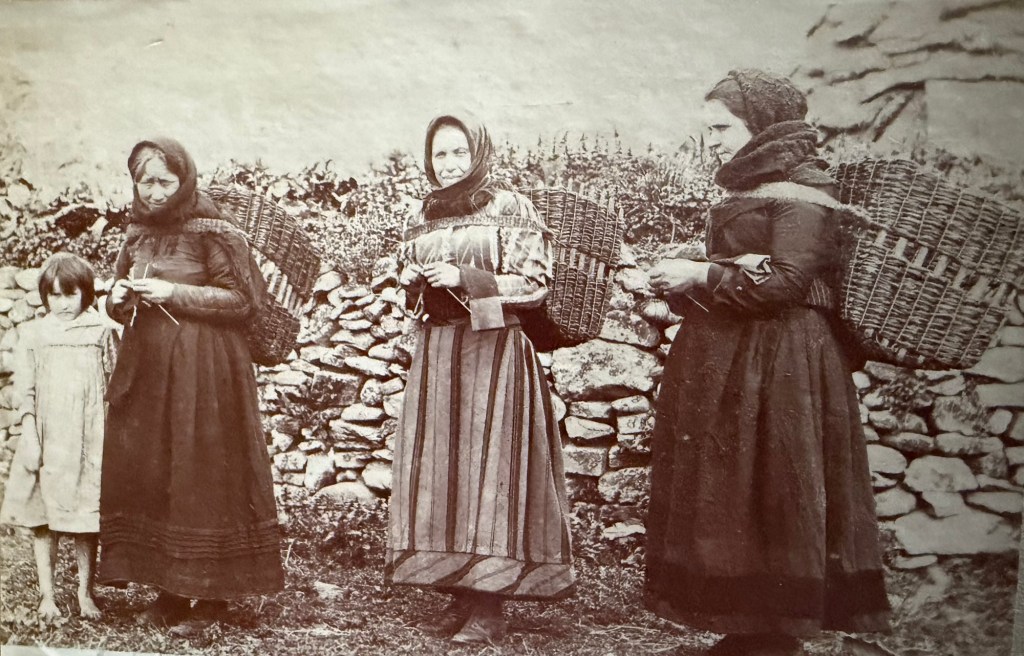
We called in at the last village called Eoropie & after anther 3 miles drive we arrived at what was to be our home for the next 6 years. I can tell you we were glad to get our & stretch our legs & for the warm cup of tea our neighbours had ready for us but we thought we had really come to the ends of the earth.
I may say I shall never forget our stay at the Butt as my sister and I had many a happy evening with the boys and girls of the village of Eoropie. They are all more modernised now with motor cars and stone houses to live in.
*I had never heard of “The Fast” Granny wrote about, so I had to find out more. I discovered that in Lewis (and elsewhere in the Highlands and Islands) many parishes held a Communion Season twice a year, lasting from Thursday to Monday. Thursday was known as the Fast Day, followed by a day of self-examination on Friday, preparation on Saturday, Communion on the Sabbath, and a Thanksgiving service on Monday. During these days, ordinary life largely came to a standstill, which explains Granny’s memory that everything seemed to close for five days.
Read more in Aspects of the Religious History of Lewis by the Rev Murdo MacAulay
 Craigachan